New: AutoArmy AI Readiness Assessment, a 30-minute path to your first AI use case. Book a free consultation
Book a consultation

Robotics AI Consulting That Gets Automation Into Production

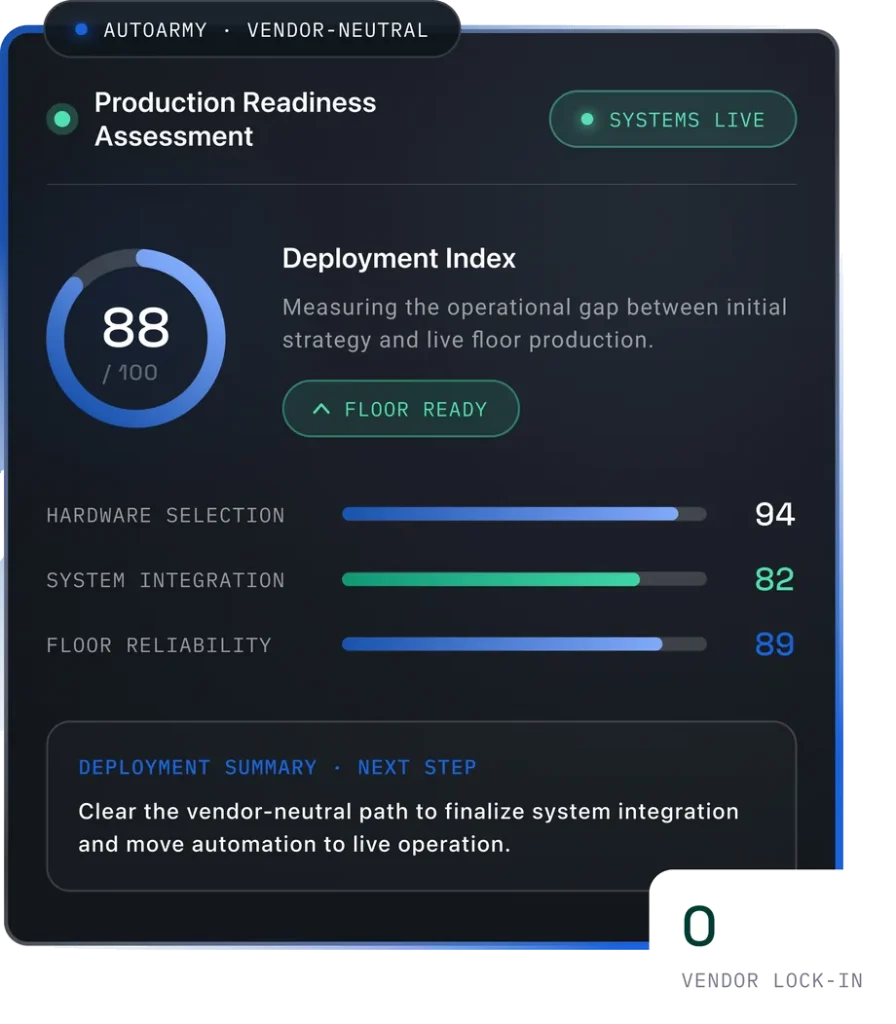
AutoArmy’s robotics AI consulting helps US businesses pick the right automation, integrate it with existing systems, and deploy robots that hold up on the floor, with a vendor-neutral path from strategy to live operation.

0 %

of enterprises now run AI in at least one workflow, most still chase measurable ROI.

0 %

of agentic AI projects will be canceled by 2027 on unclear value, Gartner.

0 ×

greater productivity for companies running AI-led processes, Accenture.

0 min

to a first prioritized use case with an AutoArmy advisor, no cost.

Why US Businesses Need Robotics AI Consulting

Robots promise a lot and stall often. The right advisory work closes the six gaps below. Each gap is real, and each comes with the evidence behind it.

0 %

of agentic AI projects canceled by 2027, Gartner

01

No Clear Automation Roadmap

Teams buy robots without a plan. McKinsey finds just 1% of executives call their AI rollouts mature. Without a roadmap, automation spend scatters and value never lands. A clear, sequenced plan fixes that fast and keeps spending focused.

02

Legacy Systems Block Integration

Old lines resist new robots. Deloitte finds nearly 60% of AI leaders name integrating with legacy systems a top challenge. Robots that cannot connect never reach the workflow. Integration is where many projects quietly stall. Clean system integration is often half the battle on the floor.

03

Wrong Vendor Selection Costs

The wrong integrator sinks the project. MIT finds AI bought from specialized vendors succeeds about 67% of the time, roughly double internal builds. A poor fit wastes months and capital. The right integrator gets you to value faster, with fewer costly do-overs.

04

Pilot Projects Never Scale

One robot cell is not a program. BCG finds only 26% of companies move beyond proofs of concept into real value. Promising pilots stall before they spread. Scaling needs a plan from day one, with clear metrics to prove it works.

05

Compliance Risks Go Unmanaged

Autonomous systems carry real risk. IBM finds 63% of organizations have no AI governance policies at all. Unmanaged robots raise safety and liability questions fast. Controls belong in the design from the start, not bolted on after an incident.

06

Internal Teams Lack Expertise

Robotics talent is scarce. Cisco finds only 31% of organizations say their talent is highly ready for AI. Building the skill set in-house is slow and costly. A matched partner brings that expertise now, without a long hiring cycle.

Robotics AI Consulting Services

Every engagement stays advisory. We assess your operation, scope what fits, and guide the build to a working deployment. You own each decision, and the advice names real platforms and tools.

01

AI Strategy

Map where robots earn their keep first. Advisory work scores use cases by payback, safety, and feasibility. It then sequences a roadmap tied to ROI. Capital follows the cells most likely to scale. You fund the sure things first, then expand from proven wins.

Bearded consultant in a gray sweater holding an open laptop while leaning against a concrete pillar

Advisory framework

Fewer wrong turns · one signed route

See Where Robots Will Pay Back First

Get an independent read on your highest-value automation, plus a roadmap to deploy it safely. No long commitment, just a clear next step.

Ready to lead with AI innovation?

Book a free consultation

Industries We Serve With Robotics AI Consulting

Automation pays off differently by sector, and advice is shaped to each one. The constant is a deployment that reaches the floor and earns its keep.

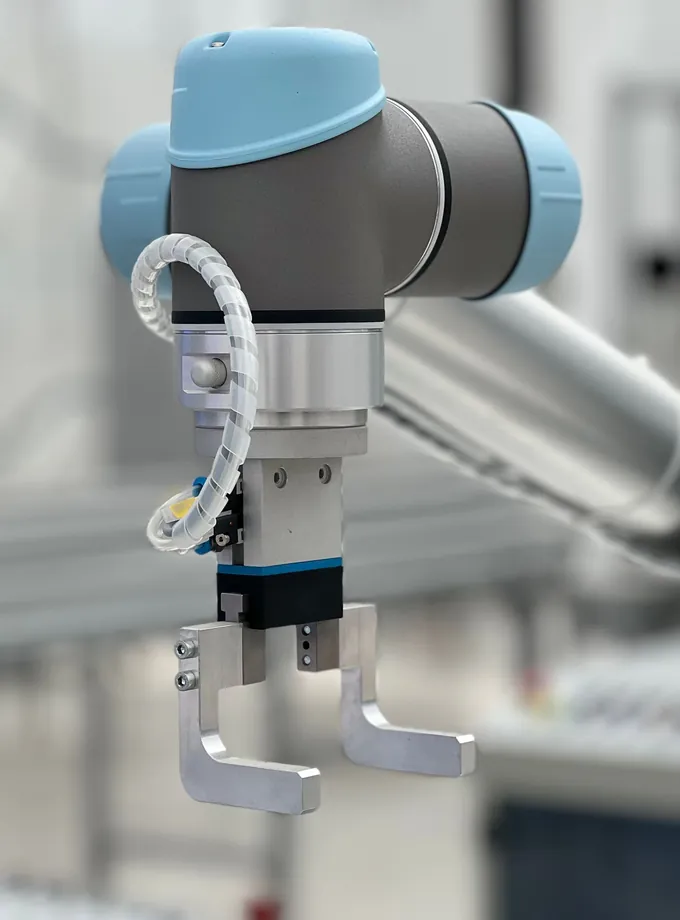
Blue and gray collaborative robot arm with a two-finger metal gripper in a blurred industrial workspace

01 / IndustryManufacturing

Manufacturing and Assembly

Factories lead robot adoption. The IFR reports about 393,700 industrial robots now operate in US plants. Robotics drives assembly, welding, and quality at scale. Output rises while defects fall. The floor runs more predictably.

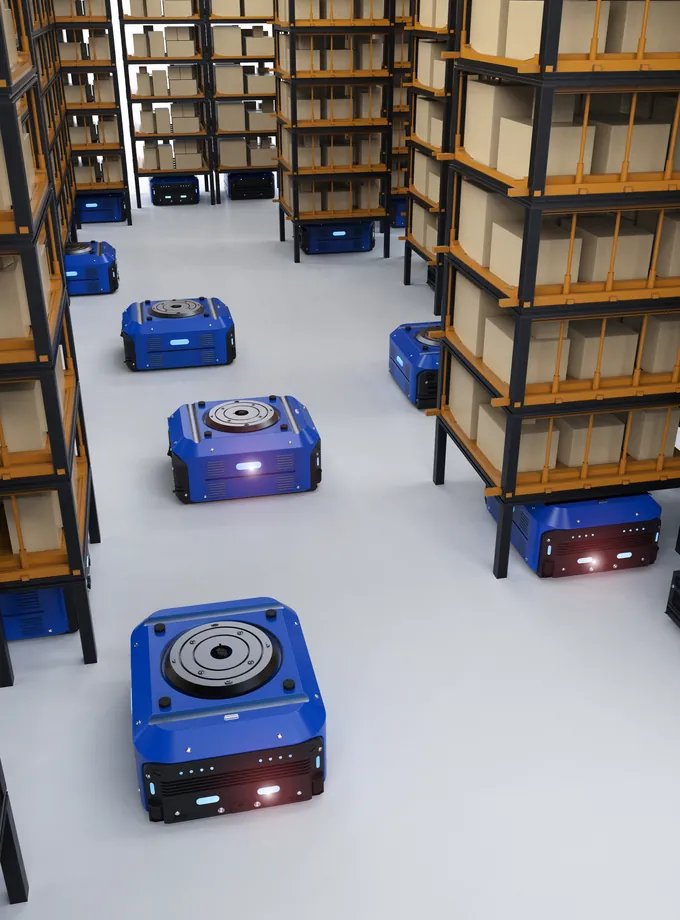
Autonomous mobile robots moving between storage racks stacked with boxes in a warehouse

02 / IndustryWarehouse

Warehouse and Logistics

Volume and labor gaps strain operations. McKinsey finds warehouse and logistics automation can cut operational costs by up to 30%. Robots handle picking, sorting, and movement around the clock. Labor gaps shrink as a result, and throughput climbs.

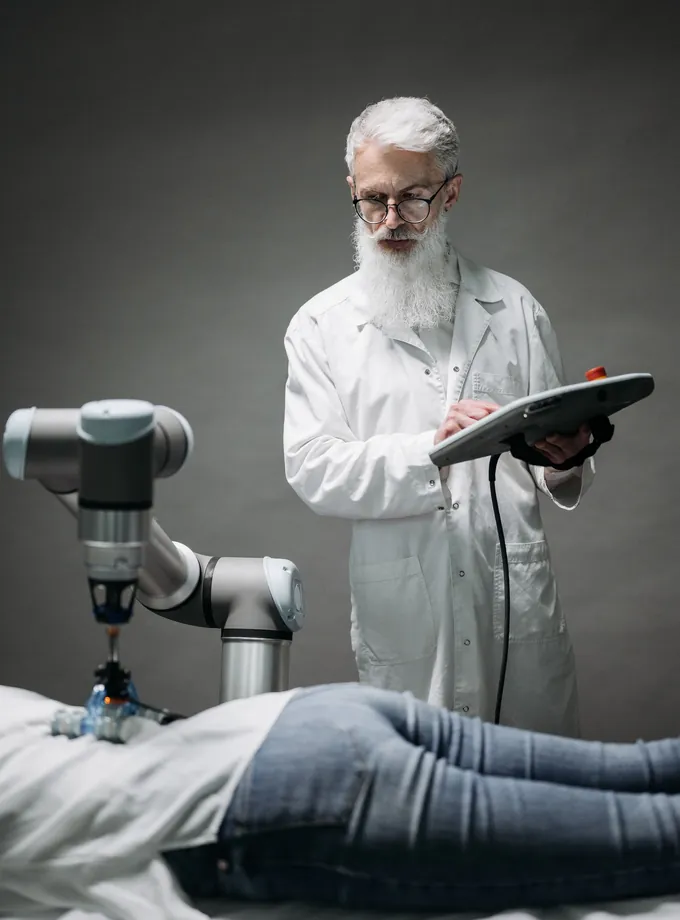
Clinician in a white coat uses a control tablet to guide a robotic arm working over a patient on a treatment table

03 / IndustryHealthcare

Healthcare Operations

Staff are stretched thin. Deloitte finds 75% of leading health companies are scaling AI. Robotics supports logistics, disinfection, and lab automation under strict safeguards. Staff get time back for patients. Safety stays the first priority throughout.

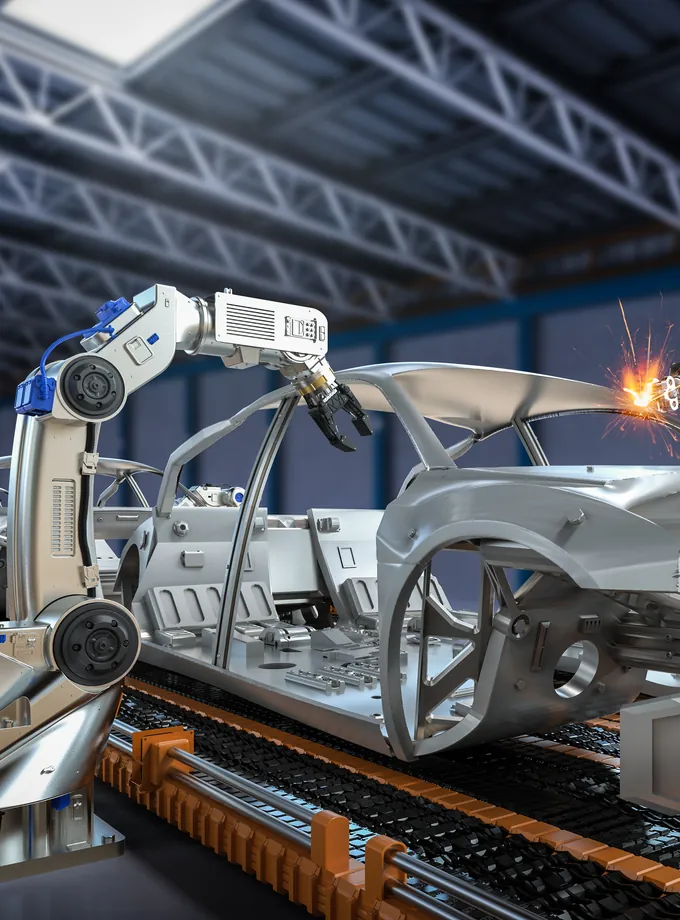
Robotic arms welding a car body frame on an automotive assembly line conveyor

04 / IndustryAutomotive

Automotive

Cars built the robot industry. The IFR notes automotive remains one of the largest adopters of industrial robots worldwide. Robotics drives body assembly, painting, and precise component handling. Speed and quality both rise.

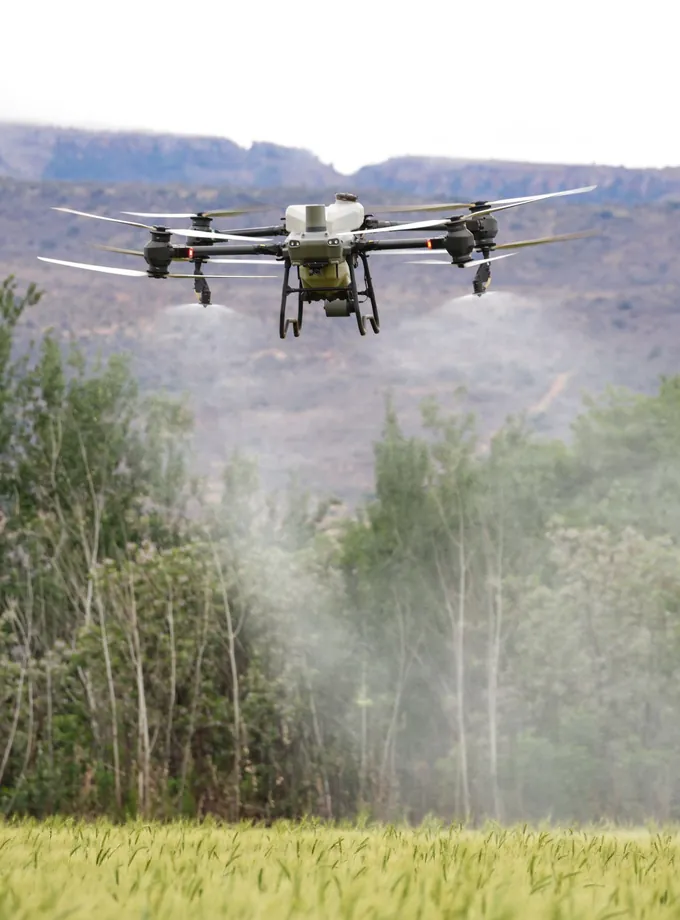
Agricultural spraying drone flying over a green wheat field, misting crops with trees and hills behind

05 / IndustryAgriculture

Agriculture and Field

Labor shortages push automation outdoors. McKinsey finds current technology could automate activities absorbing 60-70% of work time. Field robots handle harvesting, spraying, and inspection. They work long hours people cannot, in tough conditions. Yields improve while labor costs hold steady.

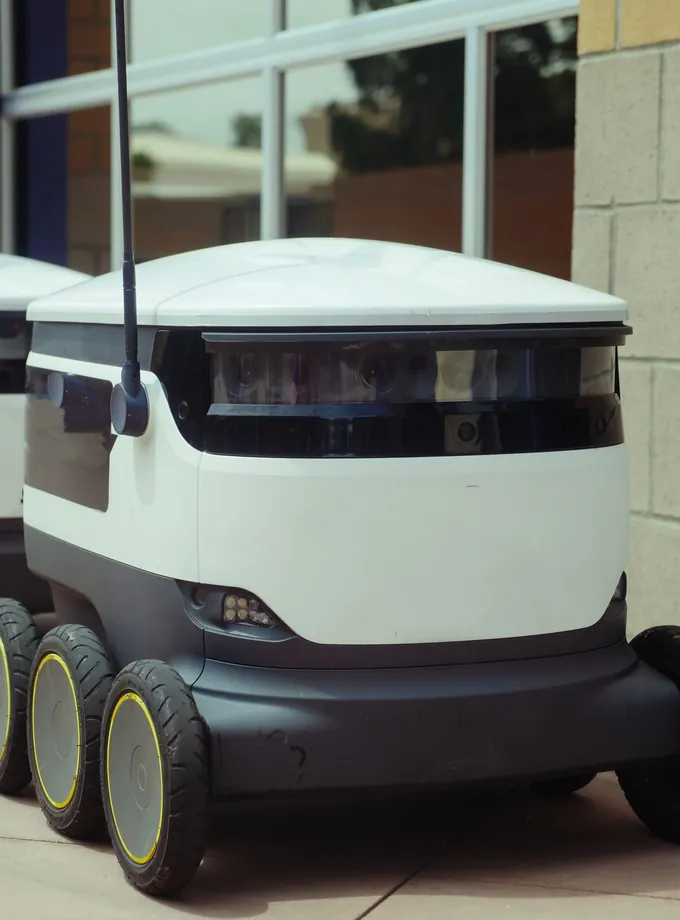
White six-wheeled autonomous delivery robot parked on a sidewalk beside a building's glass windows

06 / IndustryRetail

Retail and Fulfillment

Orders never stop. McKinsey puts gen AI’s retail and CPG potential at $400 billion to $660 billion a year. Robotics speeds fulfillment, restocking, and back-of-store tasks. Orders ship faster, with fewer errors. Customers notice the difference, and so does the bottom line.

Why Choose AutoArmy for Robotics AI Consulting

Our model is simple. Independent advice comes first, and a connection to the right delivery team follows. You get strategy and execution without the usual handoff gap.

Smiling man in a plaid shirt leaning against a wall in an office hallway while typing on a laptop

Advisory framework

Fewer wrong turns · one signed route

Ready to Put Robots to Work?

Tell us your operation and your goals. We will find the automation worth deploying and match the right team. The first step is a short, low-risk assessment.

Ready to lead with AI innovation?

Book a free consultation

Frequently Asked Questions About Robotics AI Consulting

Straight answers to the questions operations leaders ask most.

What does a robotics AI consulting service include?

It is advisory help that turns an automation idea into a working deployment. The work spans strategy, system integration, AI perception, software, and rollout. Advisors assess your operation, pick the use cases worth automating, and guide the build to the floor. You leave with a clear plan, safety and ROI targets, and a matched team, not a robot cell that sits idle. The goal is robots running in production.

How is a robotics AI consulting service different from robotic process automation consulting?

Robotic process automation handles software bots that automate digital tasks like data entry. Robotics work covers physical robots that see, move, and act in the real world, with AI to guide them. The two often work together. Physical robots add perception, safety, and integration challenges. Software-only automation never faces those.

How long does a robotics AI consulting service engagement take for a US enterprise?

A focused pilot cell can reach production in a few months. Multi-line or multi-site programs run longer, depending on integration and safety validation. We sequence the work to protect uptime. Advisors sequence a proof of concept first, so value shows before the big spend. Clear milestones, set at the start, keep the rollout on schedule and on budget. Quick wins come first.

Which industries benefit most from a robotics AI consulting service?

Physical, high-volume sectors gain the most: manufacturing, warehousing and logistics, healthcare operations, automotive, agriculture, and retail fulfillment. Each runs on repetitive or hazardous tasks where robots improve speed, safety, and cost. That said, any operation with steady physical work can benefit. The common thread is volume and consistency. A robot handles both reliably, shift after shift.

How does AutoArmy match businesses with a robotics AI consulting service partner?

We start with an advisory assessment of your operation, systems, and goals. From there we match you with vetted partners whose record fits your sector and equipment. Because we stay vendor-neutral, the recommendation follows your needs, not a hardware quota. You keep one accountable advisor, gain a proven delivery team, and approve the partner before any work begins.

What should a CTO evaluate before starting a robotics AI consulting service engagement?

Start with the use case and the payback. Name the task, the volume, and the metric you want to move. Then weigh data and integration readiness, safety requirements, and floor space. An advisory assessment fills the gaps and flags risks early. You do not need in-house robotics talent. The matched partner supplies delivery, while you own the decisions. You stay in control the whole way.

Move forward, and make the right first conversation count.

Businesses see real AI returns by making fewer wrong decisions early. AutoArmy’s advisory process helps businesses make the right call before the budget is set.

Connect with our consultants

30 minutes · no cost · no sales deck

"Three weeks from intake to a working agent in your stack."

From the AutoArmy advisory brief · 2026

Book a free consultation

30 minutes, no cost, no sales deck. Tell us a little about your goals and a preferred time, and a senior AI consultant will confirm.

Thanks! Your request is in. A senior AI consultant will email you within one business day to confirm a time.